Raspberry

- Description
- Curriculum
- Reviews
Overview
The primary goal of this quick start guide is to introduce you to the fundamentals of Raspberry Pi Development. By the end of this guide, you’ll understand how to build innovative hardware and software projects using Raspberry Pi for IoT, robotics, home automation, AI, networking, and embedded applications.
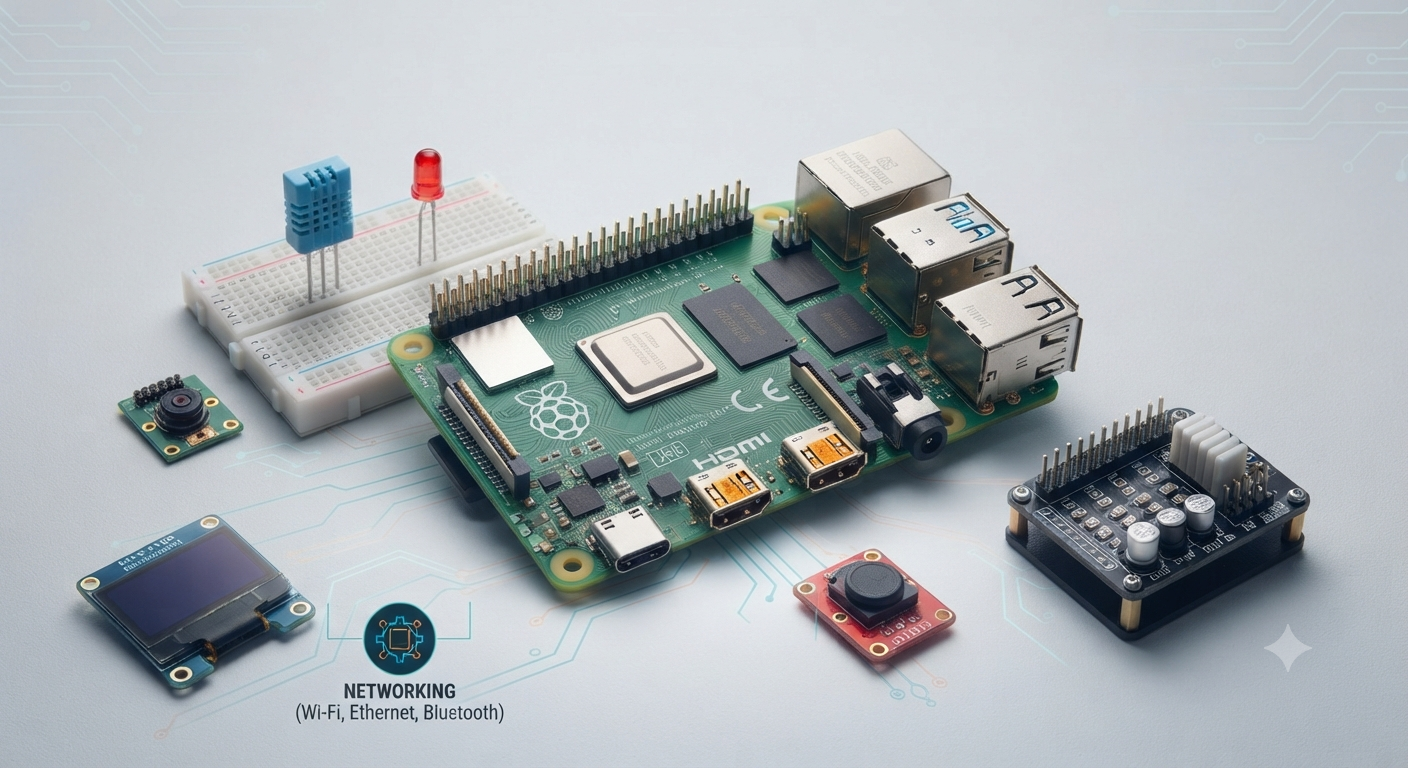
This guide demonstrates how to develop Raspberry Pi projects using Raspberry Pi OS, Python, Linux, GPIO programming, and popular hardware modules. You’ll learn how to interface sensors, control electronic devices, connect to cloud platforms, and build real-world automation and intelligent systems.
By completing this guide, you’ll have hands-on experience creating practical Raspberry Pi projects such as smart home systems, IoT devices, surveillance systems, robotics, and edge AI applications.
Main Features
Raspberry Pi Development
- Introduction to Raspberry Pi
- Raspberry Pi Hardware and Architecture
- Raspberry Pi OS Installation and Configuration
- Linux Command Line Basics
- Python Programming for Raspberry Pi
- GPIO Programming and Hardware Interfacing
- Sensor and Actuator Integration
- Camera Module and Image Processing
- IoT and Smart Home Automation
- Networking and Remote Access (SSH & VNC)
- MQTT and Cloud Integration
- Robotics with Raspberry Pi
- AI and Computer Vision Basics
- Project Development and Debugging
Industry Tools
- Raspberry Pi OS
- Python
- Thonny IDE
- Visual Studio Code
- GPIO Zero
- OpenCV
- Node-RED
- MQTT
- Git & GitHub
- Raspberry Pi Camera Module
- Sensors and Electronic Modules
This guide provides a complete introduction to Raspberry Pi Development, helping you create intelligent hardware projects and real-world solutions for automation, IoT, robotics, smart homes, surveillance, education, and edge computing.
What is the target audience?
This course is designed for:
- Beginners who want to learn Raspberry Pi Development from scratch.
- Students interested in IoT, robotics, and embedded systems.
- Electronics and computer engineering students looking for practical hardware experience.
- Software developers exploring hardware programming and automation.
- Makers and hobbyists interested in DIY electronics projects.
- Entrepreneurs building smart devices and IoT solutions.
- Robotics enthusiasts developing intelligent robotic systems.
- Anyone passionate about innovation, automation, and Raspberry Pi technology.