Virtual Reality Design & Development
Virtual Reality is the latest technology In India, It contains huge future scope for young & talented students. Now, Virtual Reality using in a lot of industries like Automobile, Architectural, Corporate, Gaming, etc. The field is growing exponentially in the last 3 years, and if still you are waiting, then its late, opportunities will be fewer, the competition will be stiffer, and established experts will be tenacious about maintaining their positions.
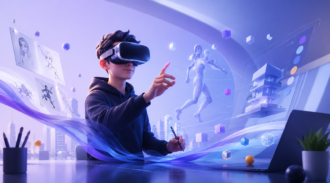
Virtual reality (VR) is an interactive computer-generated experience with a simulated environment, that incorporates mainly auditory and visual, but also other types of sensory feedback like haptic. This immersive environment can be similar to the real world or it can be fantastical, creating an experience that is not possible in ordinary physical reality. Augmented reality systems may also be considered a form of VR that layers virtual information over a live camera feed into a headset or through a smartphone or tablet device giving the user the ability to view three-dimensional images.
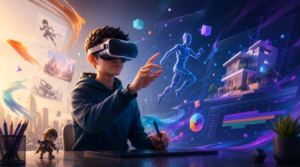
Current VR technology most commonly uses virtual reality headsets or multi-projected environments, sometimes in combination with physical environments or props, to generate realistic images, sounds and other sensations that simulate a user’s physical presence in a virtual or imaginary environment. A person using virtual reality equipment is able to “look around” the artificial world, move around in it, and interact with virtual features or items. The effect is commonly created by VR headsets consisting of a head-mounted display with a small screen in front of the eyes, but can also be created through specially designed rooms with multiple large screens.
VR systems that include transmission of vibrations and other sensations to the user through a game controller or other devices are known as haptic systems. This tactile information is generally known as force feedback in medical, video gaming and military training applications.
Course Detail
Virtual Reality Design & Development
Course Structure
Introduction to VR
Overview
Visual Perception
Introduction to Unity3d Engine
VR Build & Run
Gaze-Based Control
World Space UI
First Person Controller
Physics & Environment
Using All 360 Degrees
Social VR Metaverse
Deployment other platefrom

Virtual Reality Development
Virtual reality (VR) is one of the hottest emerging technologies in the entertainment industry today. Millions of VR devices have been sold in the US alone, but most software developers have no formal training on the technology.

World Space UI
Select your Canvas and change the Render Mode to World Space. … up your UI elements and layouts the same way you would with a Screen Space Canvas.

Unity3d Engine
Unity, the world’s leading real-time engine, is used to create half of the world’s games. Our flexible real-time tools offer incredible possibilities for game.

VR Build
This is a build for people who want to experience VR without spending an insane amount of money, but still play games with reasonable detail and achieve high …
Video Credit- Jelly
virtual-reality-training-unity-training-Delhi
Virtual Reality Design & Development
Virtual Reality is the latest technology In India, It contains huge future scope for young & talented students. Now, Virtual Reality using in a lot of industries like Automobile, Architectural, Corporate, Gaming, etc. The field is growing exponentially in the last 3 years, and if still you are waiting, then its late, opportunities will be fewer, the competition will be stiffer, and established experts will be tenacious about maintaining their positions.
Course Summery
Virtual reality (VR) is an interactive computer-generated experience with a simulated environment, that incorporates mainly auditory and visual, but also other types of sensory feedback like haptic. This immersive environment can be similar to the real world or it can be fantastical, creating an experience that is not possible in ordinary physical reality. Augmented reality systems may also be considered a form of VR that layers virtual information over a live camera feed into a headset or through a smartphone or tablet device giving the user the ability to view three-dimensional images. Current VR technology most commonly uses virtual reality headsets or multi-projected environments, sometimes in combination with physical environments or props, to generate realistic images, sounds and other sensations that simulate a user's physical presence in a virtual or imaginary environment. A person using virtual reality equipment is able to "look around" the artificial world, move around in it, and interact with virtual features or items. The effect is commonly created by VR headsets consisting of a head-mounted display with a small screen in front of the eyes, but can also be created through specially designed rooms with multiple large screens. VR systems that include transmission of vibrations and other sensations to the user through a game controller or other devices are known as haptic systems. This tactile information is generally known as force feedback in medical, video gaming and military training applications.
Course Detail
Virtual Reality Design & Development
Virtual Reality Development
Virtual reality (VR) is one of the hottest emerging technologies in the entertainment industry today. Millions of VR devices have been sold in the US alone, but most software developers have no formal training on the technology.
VR Build
This is a build for people who want to experience VR without spending an insane amount of money, but still play games with reasonable detail and achieve high ...
Video Credit- Jelly
World Space UI
Select your Canvas and change the Render Mode to World Space. ... up your UI elements and layouts the same way you would with a Screen Space Canvas.
Unity3d Engine
Unity, the world's leading real-time engine, is used to create half of the world's games. Our flexible real-time tools offer incredible possibilities for game.
Course Structure
- Introduction to VR
- Overview
- Visual Perception
- Introduction to Unity3d Engine
- VR Build & Run
- Gaze-Based Control
- World Space UI
- First Person Controller
- Physics & Environment
- Using All 360 Degrees
- Social VR Metaverse
- Deployment other platefrom
What You'll Get
We are Proud
Lorem ipsum dolor sit amet, consectetur adipisicing elit, sed do eiusmod tempor incididunt ut labore et dolore magna aliqu.
OUR USPs
Dual-focus industry curriculum
We bridge the creative-technical gap by teaching advanced game mechanics design alongside production-ready programming (C# / C++), prepping you for any studio role.
Portfolio-first graduation criteria
Students graduate with 3 to 5 fully polished, documented game case studies featuring clean code and interactive WebGL builds rather than just theoretical certificates.
live-studio simulation projects
Students collaborate across disciplines (designers, developers, and artists) to build complete games under strict milestone-driven pipelines that mimic real AAA workflows.
Real-time profiling & optimization training
We explicitly train students in performance engineering—teaching them to optimize frame rates, manage memory, and handle complex 3D math for VR and console environments.
Active industry mentorship & reviews
Your source code and level layouts are directly critiqued through regular, 1-on-1 code reviews and design feedback sessions led by working industry professionals.
Dedicated publishing pipelines
We guide students through the entire publishing lifecycle, helping them launch their projects on platforms like itch.io and Steam to build verifiable public track records.
Meet You Trainer
He have industrial and training experience more then a decad of reputed corporates and university
- Autodesk Certified
- CSM Certified
- Best Emplye awarded twice
- PGDA in Animation
- Certified In AR VR
- Certified in UI/UX
Click Here to know more
Other Courses
- All
- Material Design
- Software Development
- Exercise
- BodyBuilding
- Communication
- Illuminate
- Interaction