AR VR Design & Development

- Description
- Curriculum
- Reviews
Overview
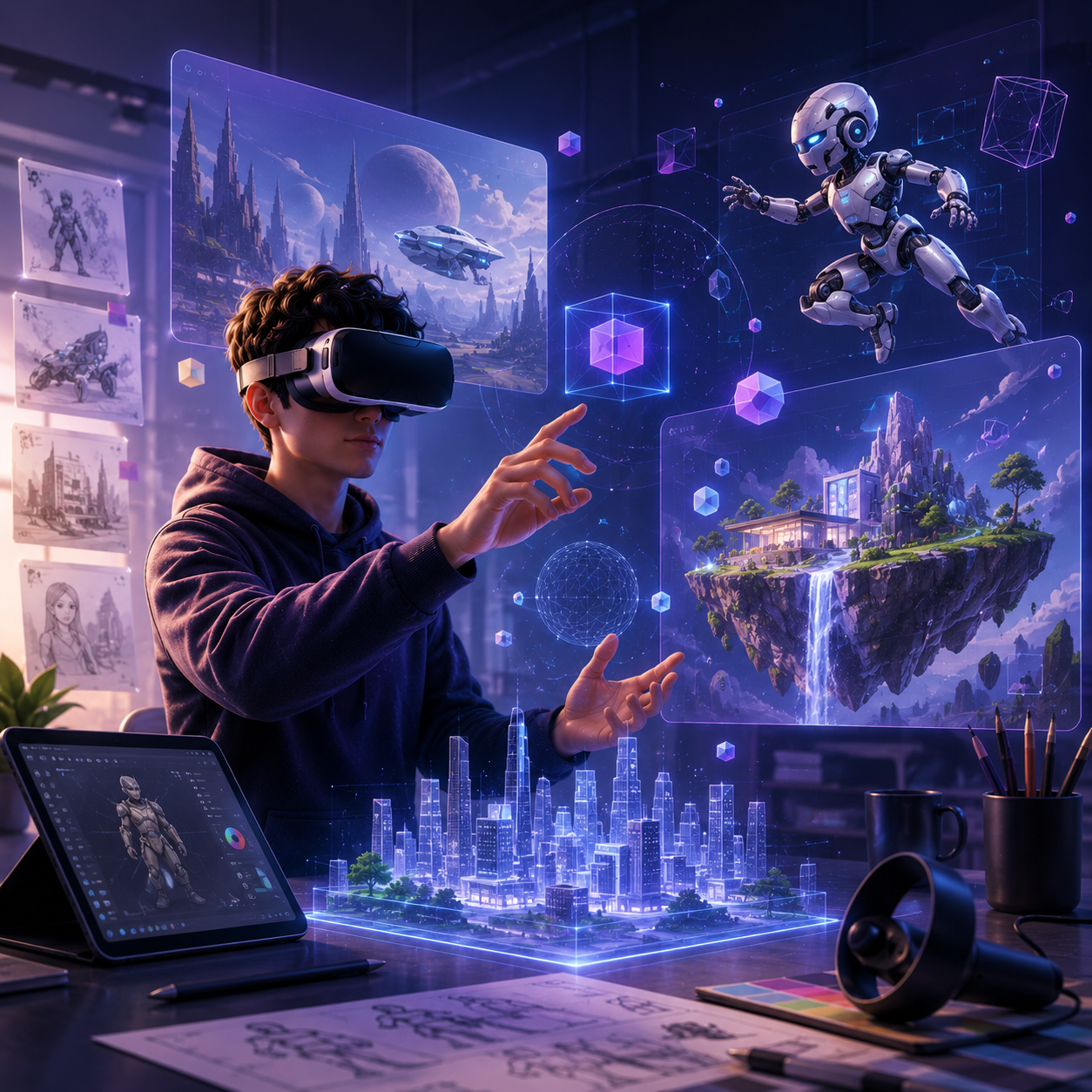
The primary goal of this quick start guide is to introduce you to the fundamentals of AR & VR Design and Development. By the end of this guide, you’ll understand how to design immersive Augmented Reality (AR) and Virtual Reality (VR) experiences, develop interactive applications, and deploy them across modern AR/VR platforms.
This guide demonstrates how to build AR and VR applications using industry-standard tools such as Unity 3D, Unreal Engine, AR Foundation, Vuforia, ARCore, ARKit, and C#. You’ll learn how to create 3D environments, implement interactive experiences, integrate hand tracking and controllers, optimize performance, and publish applications for mobile devices and VR headsets.
By completing this guide, you’ll have hands-on experience developing immersive AR and VR projects, including interactive simulations, educational applications, virtual tours, gaming experiences, and enterprise solutions.
Main Features
AR & VR Design
- Introduction to AR & VR Technologies
- 3D Environment and Scene Design
- User Interface (UI) & User Experience (UX) for XR
- Spatial Interaction Design
- Lighting, Materials, and Visual Effects
- 3D Asset Integration
- Animation and Interactive Storytelling
- Performance Optimization for AR & VR
AR & VR Development
- Unity 3D and Unreal Engine Fundamentals
- AR Foundation, ARCore & ARKit
- Vuforia Integration
- C# Scripting for Interactive Applications
- Object Recognition and Image Tracking
- Hand Tracking and Gesture Recognition
- VR Controller Integration
- Physics and Collision Systems
- Multiplayer AR/VR Basics
- Cross-Platform Deployment
- Testing, Debugging, and Publishing
Industry Tools
- Unity 3D
- Unreal Engine
- AR Foundation
- Vuforia
- ARCore
- ARKit
- Blender
- Autodesk Maya
- Visual Studio
- Git & GitHub
This guide provides a complete introduction to AR & VR Design and Development, helping you create immersive, interactive, and high-performance applications for gaming, education, healthcare, architecture, manufacturing, training, retail, and enterprise solutions.
What is the target audience?
This course is designed for:
- Beginners who want to learn AR & VR Design and Development from scratch.
- Students interested in immersive technologies and extended reality (XR).
- Game developers looking to build AR and VR experiences.
- UI/UX designers creating immersive user experiences.
- Software developers interested in Unity, Unreal Engine, and XR technologies.
- Architects, engineers, and educators using AR/VR for visualization and training.
- Entrepreneurs and startups developing innovative AR/VR solutions.
- Anyone passionate about immersive technologies and the future of interactive digital experiences.