Data Analysis

- Description
- Curriculum
- Reviews
Overview
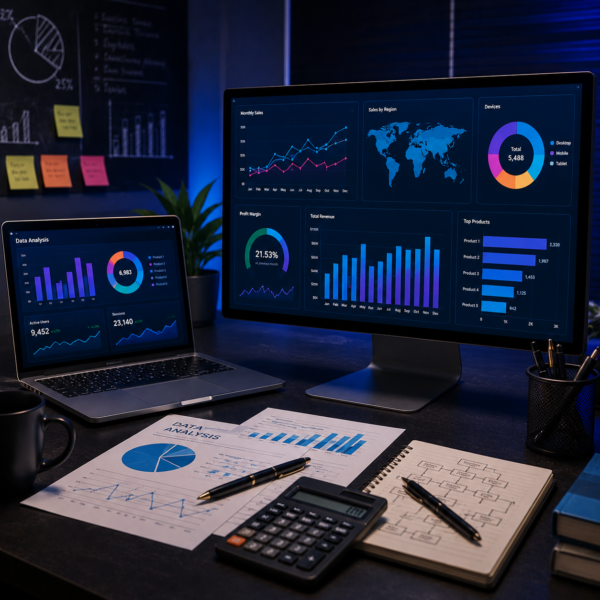
The primary goal of this quick start guide is to introduce you to the fundamentals of Data Analysis. By the end of this guide, you’ll understand how to collect, clean, analyze, and visualize data to uncover meaningful insights and support data-driven decision-making.
This guide demonstrates how to work with industry-standard tools such as Microsoft Excel, SQL, Python, Power BI, and Tableau. You’ll learn how to manipulate datasets, perform statistical analysis, create interactive dashboards, and present insights through compelling visualizations.
By completing this guide, you’ll have hands-on experience analyzing real-world datasets, building reports and dashboards, and applying analytical techniques to solve business problems across various industries.
Main Features
Data Analysis
- Introduction to Data Analysis
- Data Collection and Data Cleaning
- Data Transformation and Preparation
- Microsoft Excel for Data Analysis
- SQL for Database Querying
- Python for Data Analysis
- Data Visualization Techniques
- Descriptive and Exploratory Data Analysis (EDA)
- Statistical Analysis
- Business Intelligence Fundamentals
- Dashboard Creation
- Data Interpretation and Reporting
- Problem Solving Using Data
- Real-World Case Studies
Industry Tools
- Microsoft Excel
- SQL
- Python
- Pandas
- NumPy
- Matplotlib
- Power BI
- Tableau
- Jupyter Notebook
- Google Sheets
This guide provides a complete introduction to Data Analysis, helping you transform raw data into meaningful insights through modern analytical techniques, visualization tools, and business intelligence platforms.
What is the target audience?
This course is designed for:
- Beginners who want to learn Data Analysis from scratch.
- Students interested in data science and business analytics.
- Aspiring data analysts preparing for internships or professional roles.
- Business professionals who want to make data-driven decisions.
- Software developers looking to strengthen their analytical skills.
- Researchers and educators working with large datasets.
- Entrepreneurs who want to analyze customer and business data.
- Anyone interested in learning how to organize, analyze, and visualize data effectively.